On grid congestion the Netherlands and the solution proposed for ZERO
The Netherlands have long been pioneers in the energy transition and are now facing ambitious climate targets for 2030. Yet, because of this ambition and its related need for electricity, the energy grid is facing strong congestion.
Wieteke Hoftijzer, Ideation Consultant at the Innovation Hub of Alliander, an energy grid operator in the Netherlands, is enlightening us on the grid congestion and explaining the solution provided within the EUI ZERO project taking place in the Elderveld neighbourhood of the city of Arnhem.
- What is the energy situation in the Netherlands and how does it affect energy distribution ?
The situation in the Netherlands is a direct result of the ongoing energy transition. We’re for example seeing a significant uptake in solar panel installations and a rapid rise in the use of electric vehicles. This means that both the demand for and supply of electricity are increasing—especially during peak times—which is putting a great deal of pressure on the grid. Electricity is expected to become a much more dominant energy carrier, significantly increasing pressure on the existing grid infrastructure. This surge is severely testing the grid’s capacity, and the resulting congestion limits the transport capacity of the grid, leading to waiting lists for new or expanded connections and increasing the need for smart use of existing infrastructure.
To give you a concrete example, recent reports warn that, unless we take action, without changes in how the grid is used, capacity constraints may increasingly limit new connections in parts of cities like Arnhem. This isn’t just a technical matter—it has real social consequences, worsening the housing crisis and making it much harder to roll out essential technologies such as heat pumps and EV chargers. Ultimately, without intervention, this will seriously slow down progress towards our energy transition targets.
For a grid operator, such as Alliander, this is becoming central. Concretely, we are having a structural problem : if we want to address the situation as it is, we need to create new connexions, which require extra workforces and materials. This would also require building new medium voltage areas – that nobody want to have in their gardens! We therefore have a very long waiting list, especially in newly built areas, though it is the case everywhere. In other words, we cannot give people the energy they want when they want it.
On the positive side, there could potentially be enough energy – which we are not responsible for producing – but this would, once again, need extra infrastructure. One of the ways people address this at the moment is, for example, but charging their cars in public charging stations.
- What is the situation in Elderveld, where the ZERO project will take place?
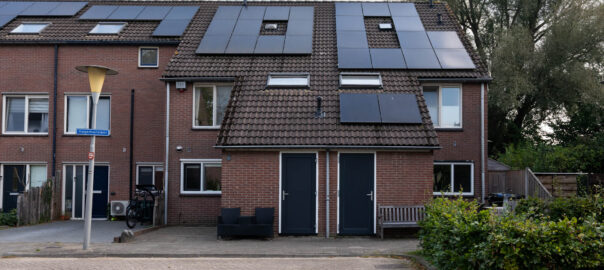
On paper, Elderveld is a fairly typical Dutch neighbourhood, which is why it was selected as a pilot with strong potential for replication elsewhere. It is quite mixed with low and medium-income residents, who are both owners and renters.
In addition, it is interesting because it was originally designed with gas infrastructure and faces low public awareness of grid congestion and the energy transition. As potential late adopters, residents risk bearing disproportionate social costs. This directly relates to Arnhem’s ambition to make the energy transition fair, affordable and inclusive, especially for vulnerable households.
We also have a focus on the low-income residents as they are overall less engaged, limiting their access to benefits: this exacerbates social disparities, hindering Arnhem’s goal of an equitable energy transition.
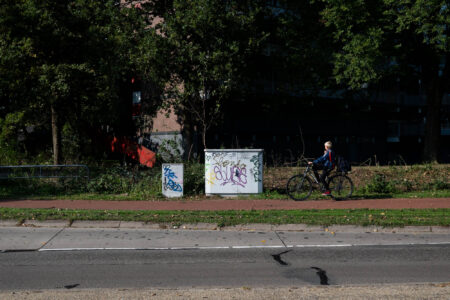
Feeder Pillar (c) Medea Huisman
- How will you address this in ZERO ?
Usually, our main solution is to seek and expand our grid capacity by creating waiting lists together while exchanging municipalities. This can take years, with increasing scarcity of materials, space, labour and enormous social costs. Sometimes we develop solutions for neighbourhoods, but mostly these are just one-off solutions for individuals.
In Elderveld, we decided to opt for another solution which is to optimise the use of the energy grid.
Because we are a technical organisation, we always think about technical solutions. But optimising the usage of the grid is not an innovation in itself. We will actually reach out to the people who live in the neighbourhood and will involve them: we will involve residents in co-designing solutions for their neighbourhood, within clearly defined technical, social and regulatory boundaries. They will be trained on energy production and consumption and will be supported with tools such as Smart Energy Management Systems and a digital twin to better understand energy flows and the impact of different choices. We will advise them about the consequences and impacts of each of the solutions they could choose from. Such solutions will be about the energy source (e.g. heating network, batteries bought out together, solar panels on a school or on a company) or distribution and sharing energy (e.g. energy cooperative). Some solutions could also come from them! They will then become the owners of the solutions; we will support and enable the implementation of the selected solutions within our role as grid operator.
As a grid operator, our role will be twofold: we will be taking part in the co-creating process with the residents as well as will deliver the selected solutions.
- Are used to working in this way?
For us, working with people is quite new. To be honest, our standard solutions are often top-down and technology-driven approaches.
But in the last couples of years, we have had to install more cables, we opened streets and we have faced the need to relate to people indifferent ways – we became more visible and people started coming to us and we look for collaborations ourselves.
- Do you foresee any challenges?
The most challenging part will be to get all the people motivated, so that they feel concerned about it. And if they choose something, we must deliver it: we need to make sure this will happen. We will need to keep our promises.
- Any final words?
ZERO functions as a living lab within Arnhem’s broader Energy Programme, where social, technical and organisational innovations are tested at neighbourhood level. The lessons learned in Elderveld will inform future area-based energy plans across the city. This process will inform our own solutions and will be mainstreamed into our overall operations. Replication will not mean copying solutions, but transferring insights on how social, technical and organisational choices can be aligned to better address grid congestion across the Netherlands. Let the ZERO project begin!
Reposted from Portico
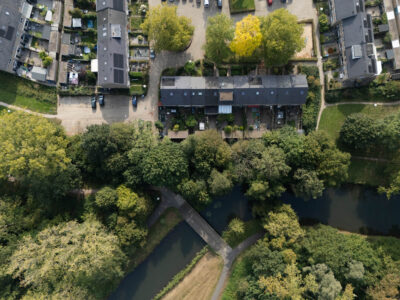
Elderveld (c) Medea Huisman