Yearly Archives: 2026

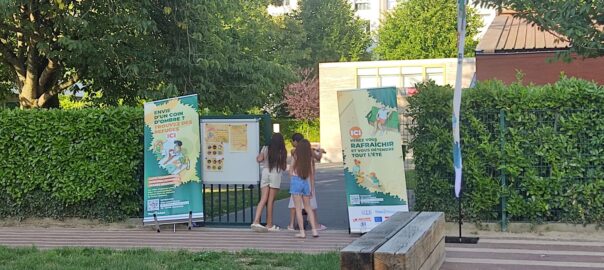
Did you know you could do THIS in a schoolyard, a library or a museum?

Usually, you enter a school, when you are a pupil or a teacher. You go there to learn in classrooms, play in the schoolyards during breaks. As an adult, you don’t know how the inside of the school – building and yard – look like.

You go to a library to read, study or work, benefit from some calm and access to a variety of useful resources. You go to a museum to get acquainted or deepen your knowledge with a topic, a period of time or an artist.

What if you could also enjoy these places to get some freshness in the summer? How would it look like? Would you still go there for the same types of activities? Could you, as an adult, access the schoolyards?

That’s what the EUI Time2Adapt project has experimented during summer 2024 and 2025 and that we are now deep diving into! Continue reading

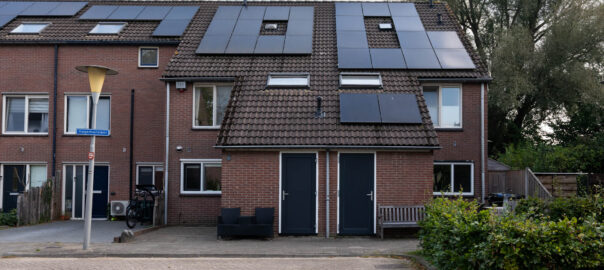
‘We want to optimise the grid by making residents co-owners of the solution’

On grid congestion the Netherlands and the solution proposed for ZERO

The Netherlands have long been pioneers in the energy transition and are now facing ambitious climate targets for 2030. Yet, because of this ambition and its related need for electricity, the energy grid is facing strong congestion.

Wieteke Hoftijzer, Ideation Consultant at the Innovation Hub of Alliander, an energy grid operator in the Netherlands, is enlightening us on the grid congestion and explaining the solution provided within the EUI ZERO project taking place in the Elderveld neighbourhood of the city of Arnhem. Continue reading

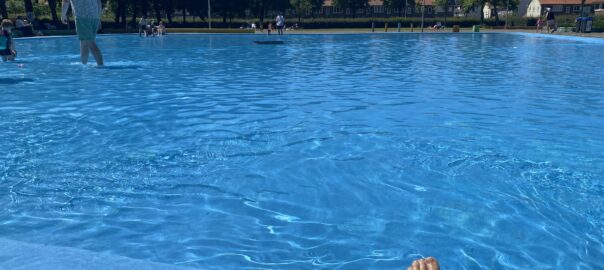
Plejadenplein summer 2025 © Marcelline Bonneau, IA Expert

GfW Urban Chapter N°1- Beneath the surface: tackling climate and health challenges in a vulnerable neighbourhood through social, spatial and ecological measures

Pleijadenplein is amazing: it’s fresh, calm, relaxing, the water is for all, infrastructure is welcoming (water fountains, toilets, security), even an ice-cream truck is present! The swimming pool at the centre of Tuindorp Oostzaan and of Plejadenplein is definitely a public service worth copying. Why, then, change it? Because what is visible does not reflect what takes place underneath, nor the issues faced outside this square, in particular, the multiple climate and water-related risks, from house mould to pluvial flooding, threatening residents already facing poverty and health issues.

This is why Ground for Well-being (GfW) will combine social, spatial and ecological measures to design two public spaces, the Plejadenplein and Meteorenweg and their subsurface altogether through a Soil and Water Sensitive Urban Design (SWSUD) approach. The project, funded through EUI, will also engage residents in implementing green measures in and around their homes.

This first chapter of the Urban Diary sets out the scene, and in particular: the context for this project, its details, the partners and the reasons they joined the project, as well as the main foreseen impact and challenges. Continue reading